
 Business License

IEC 60296 and ASTM D3487: Transformer Oil Standards Explained
A commissioning engineer once watched a transformer acceptance test stall over a single line in the specification. The contract cited IEC 60296, the laboratory had reported against ASTM D3487, and the two documents described the same oil with slightly different numbers and different test methods. Sorting out the mismatch took longer than the actual testing.
That kind of confusion is common, because the two standards that govern mineral insulating oil overlap but are not identical. This article explains what IEC 60296 and ASTM D3487 each cover, how their key properties compare, and why the distinction matters when you are buying oil, specifying equipment, or setting a purification target.
1. Why Transformer Oil Standards Exist
Transformer oil has to perform for decades under heat, voltage, and exposure to oxygen and moisture, so it cannot be judged by appearance alone. Standards exist to define, in measurable terms, what an acceptable new mineral oil looks like, covering properties such as breakdown voltage, moisture, acidity, and oxidation stability.
A standard gives everyone in the chain a common language. The refinery knows what to produce, the supplier knows what to test, and the buyer knows what to accept. Without that shared reference, each party would rely on its own idea of quality, and disputes like the one at the start of this article would be the rule rather than the exception.
The two most widely referenced documents are IEC 60296, published by the International Electrotechnical Commission, and ASTM D3487, published by ASTM International. Most national standards are built on one or the other, which is why understanding both covers most of the transformer oil the world uses.
2. IEC 60296: The International Baseline
IEC 60296 sets out the specification for unused mineral insulating oils intended for transformers and switchgear. It is the reference used across much of Europe, Asia, Africa, and the Middle East, and it is structured around classes that reflect different performance and oxidation requirements rather than a single fixed recipe.
The standard measures a broad set of properties. Breakdown voltage and moisture describe the oil's immediate electrical condition, while acidity, dissipation factor, and interfacial tension describe its state of oxidation. Oxidation stability and sludge formation are tested under accelerated conditions to predict how the oil will behave over years in service.
Because IEC 60296 is international, it is written to be adopted and referenced by national bodies. Many countries publish their own standard that is technically aligned with IEC 60296, sometimes with tighter or additional local requirements layered on top. A specification citing IEC 60296 therefore points at a widely understood baseline.
3. ASTM D3487: The North American Specification
ASTM D3487 is the specification for mineral insulating oil used in electrical apparatus, and it is the document most commonly referenced in North America and in projects that follow North American practice. It shares the same goal as IEC 60296, defining what a suitable new mineral oil must achieve, but it approaches some measurements and limits differently.
Like IEC 60296, ASTM D3487 covers breakdown voltage, moisture, acidity, and oxidation behavior. It also places explicit emphasis on properties such as interfacial tension and power factor, which are used as sensitive indicators of contamination and aging. The two standards measure the same physical reality but sometimes through different test methods, which is why numbers cannot always be compared directly.
A buyer should know which standard their region or contract follows, because the acceptance criteria are written against one or the other. A laboratory that reports against the wrong document can produce numbers that look alarming or reassuring for the wrong reason, which is exactly the trap that slows down commissioning. Junsun Mechanical & Electrical builds purification machines to meet either specification, since the target properties are the same whichever document is cited.
4. Key Properties Both Standards Measure
Breakdown voltage is the headline measurement, and it describes the voltage at which the oil fails electrically in a standard test gap. New oil is typically specified to deliver a minimum around 30 kV on delivery, though freshly processed oil commonly tests far higher, in the range of 60 to 70 kV. Moisture is the companion measurement, because water is a principal factor that drags breakdown voltage down, and new oil is usually limited to roughly 30 parts per million or less on delivery.
Acidity, reported as a neutralization number, tracks the acids that form as the oil oxidizes. Both standards hold this to a small fraction of a milligram of potassium hydroxide per gram, in the range of roughly 0.01 to 0.03 depending on the document. Interfacial tension, often required above 40 mN/m, is another oxidation indicator that falls as polar contaminants build up.
The dissipation factor, sometimes called power factor or loss tangent, is measured at elevated temperature and catches conductive contaminants that breakdown voltage alone can miss. The limits are tight, on the order of a few thousandths at 90 to 100 degrees Celsius. Together these properties give a rounded picture of whether the oil is clean, dry, and stable.
Alongside the electrical and chemical properties, both standards also set physical requirements that matter for how the oil behaves in service. Viscosity is limited so the oil flows well enough to cool the windings, the flash point is specified high enough for safe operation, and the pour point is set low enough that the oil remains fluid in cold climates. These physical limits are easy to overlook next to the electrical numbers, but an oil that meets the breakdown voltage requirement while failing the cold-weather limits is not actually suitable for an outdoor transformer in a cold region.
5. How the Two Standards Compare
Placing the two standards side by side shows that they agree on what matters while differing on exact methods and limits. The table below summarizes the main properties and the rough expectation each standard sets, using rounded values to keep the comparison readable rather than exhaustive.
| Property | IEC 60296 (typical) | ASTM D3487 (typical) | What It Catches |
|---|---|---|---|
| Breakdown voltage | Min around 30 kV on delivery | Min around 30 kV on delivery | Moisture and particles |
| Water content | Roughly 30 mg/kg or less | Roughly 35 ppm or less | Free and dissolved water |
| Acidity | Around 0.01 mg KOH/g | Around 0.03 mg KOH/g | Oxidation acids |
| Interfacial tension | Used as oxidation indicator | Typically above 40 mN/m | Polar contaminants |
| Dissipation / power factor | Low limits at 90 C | Low limits at 25 and 100 C | Conductive contaminants |
| Oxidation stability | Specified by class | Specified with sludge limits | Long-term aging |
The practical message is that neither standard is inherently stricter, they are simply organized differently. A buyer should treat the numbers as meaningful when they are reported against the correct document and test method, not when they are read against the wrong one, and should ask for the standard to be named explicitly on every certificate.
6. Other Standards Worth Knowing
Beyond the two main documents, several national standards appear regularly. China's GB 2536 governs transformer oil and is technically aligned with IEC 60296, so equipment and oil specified under GB 2536 sit comfortably alongside international practice. Other countries publish their own equivalents, and buyers in regulated markets often see these cited together with an IEC or ASTM reference.
There are also standards for the broader family of dielectric fluids. Synthetic ester and silicone liquids have their own documents, because their chemistry and test methods differ from mineral oil. When a specification mentions dielectric fluid rather than transformer oil, it is worth confirming which standard applies before assuming the mineral oil requirements.
For a buyer, the key skill is not memorizing every clause but knowing which standard governs their contract and asking the supplier to test and report against that document. This single habit removes most of the confusion that standards are blamed for. Junsun supplies equipment to markets that follow both IEC and ASTM practice, so its documentation is built to match either reference.
7. How Standards Guide Purification Targets
Standards written for new oil also define the finish line for purification. When a transformer's oil has aged, the goal of treatment is to bring it back toward the same properties that a new oil standard requires, particularly breakdown voltage, moisture, and acidity. The standard supplies the numbers the maintenance team is aiming at.
Vacuum purification addresses breakdown voltage and moisture directly, which is why a treatment pass is judged by how far those two readings recover. If acidity is the problem, purification alone is not enough, and a regeneration stage is added to strip the acids, since no amount of vacuum removes what oxidation has chemically created.
Chongqing Junsun Mechanical & Electrical Co Ltd supplies both purification and regeneration equipment, and the choice between them maps cleanly onto the oil test results. Matching the machine to the standard the oil must meet is the practical way to turn a specification into a working plan rather than a paperwork exercise.
Standards help when the oil is tested properly. A representative sample taken with clean equipment and a sealed container gives a result that can be trusted, while a sample contaminated by poor handling can produce misleading numbers that trigger unnecessary treatment or mask a real problem. Maintenance teams that sample consistently, using the same method every time, build a trend they can act on, and that trend is what turns a written standard into a working maintenance program.
8. Real-World Examples
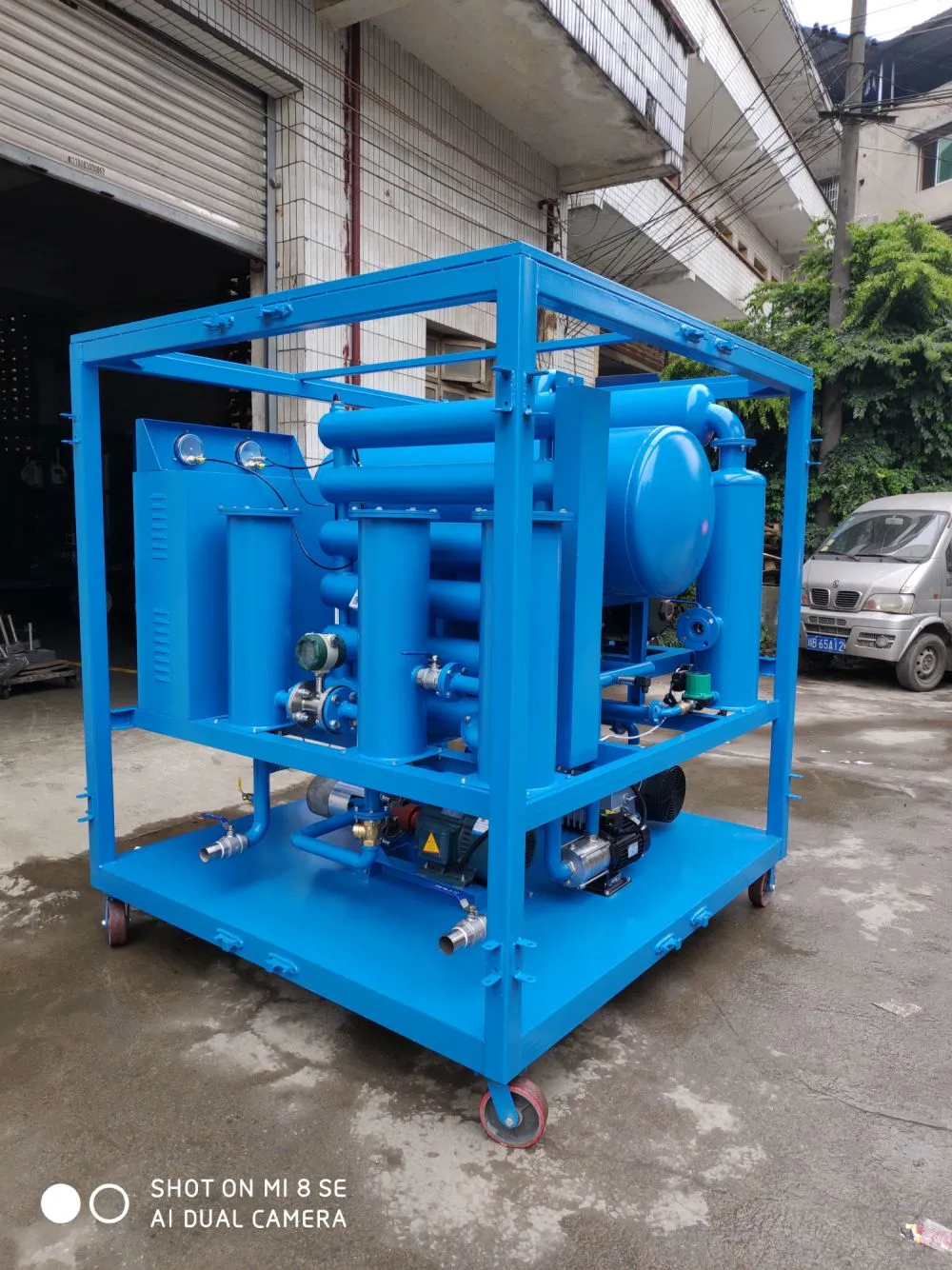
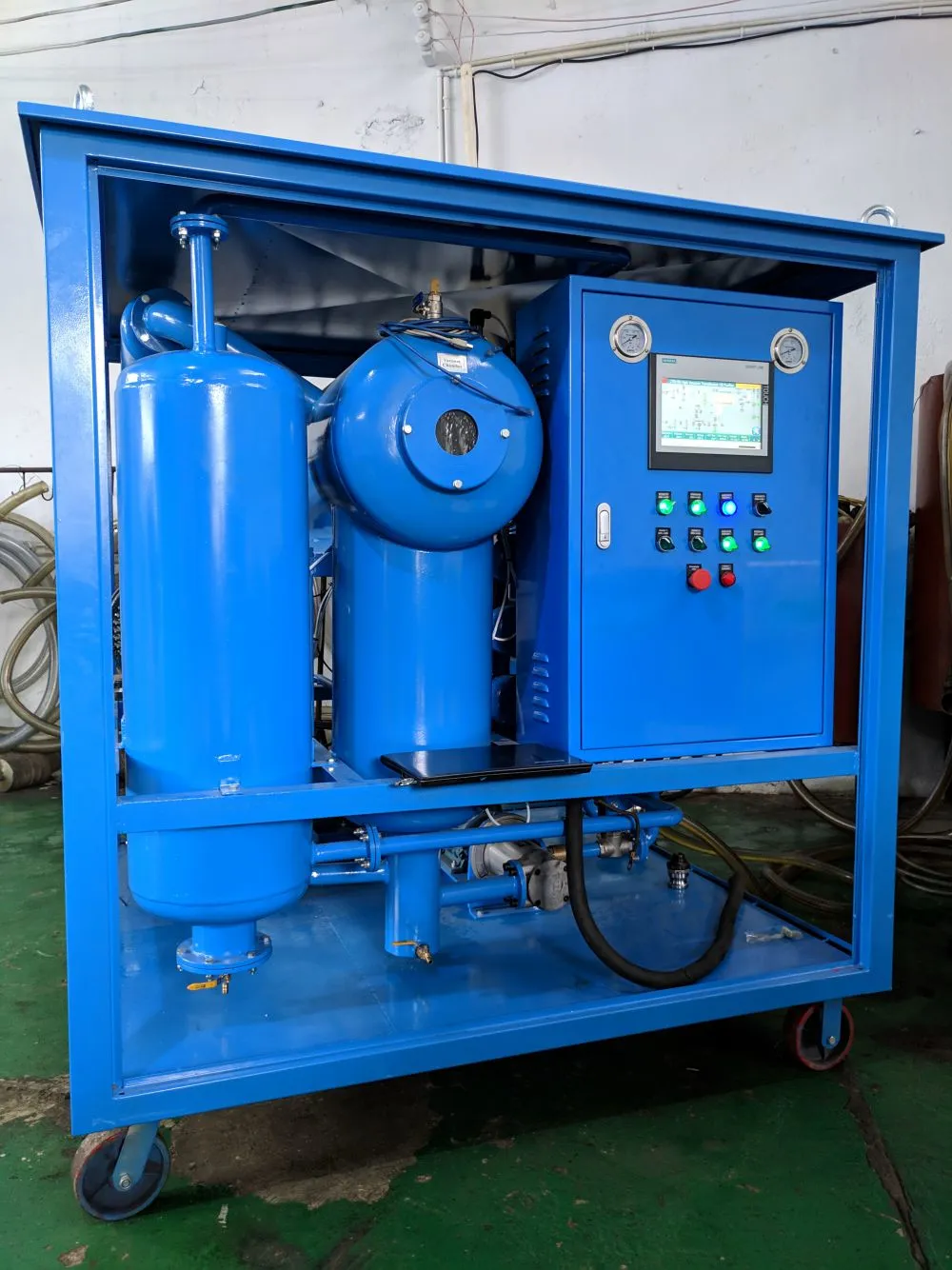
A utility in East Africa was commissioning new transformers against IEC 60296 and needed the oil dried and degassed before first fill. A double-stage high-vacuum machine from the Junsun range brought moisture to single-digit parts per million and lifted breakdown voltage comfortably above the delivery minimum, so the units passed their acceptance tests without rework.
Not long ago, a service contractor reported a batch of stored oil against the wrong standard and nearly rejected it as out of specification. Re-running the figures against the correct document showed the oil was actually compliant. The near-miss is a reminder that the standard named on the certificate matters as much as the numbers themselves.
9. Frequently Asked Questions
9.1 What is the difference between IEC 60296 and ASTM D3487?
Both define the specification for unused mineral insulating oil in electrical equipment, but they come from different bodies and organize their requirements differently. IEC 60296 is the international baseline used across much of Europe, Asia, Africa, and the Middle East, while ASTM D3487 is the North American specification. They measure the same core properties, such as breakdown voltage, moisture, acidity, and oxidation stability, but some test methods and exact limits differ, so results should always be read against the standard that was named in the contract.
9.2 What breakdown voltage should new transformer oil have?
New mineral oil is typically specified to deliver a minimum around 30 kV when tested on delivery, but freshly processed oil commonly tests much higher, often in the range of 60 to 70 kV. The exact acceptance value depends on the standard and the equipment voltage class, with larger high-voltage transformers sometimes requiring a higher minimum. The important practice is to test the oil as received and confirm it meets the standard cited in the purchase specification, so the certificate and the contract point at the same document.
9.3 Can purification bring aged oil back to the new-oil standard?
Purification reliably restores the properties that contamination degrades, which are mainly breakdown voltage and moisture, so those can usually be brought back toward the new-oil limits. Acidity, however, is a product of chemical oxidation and cannot be removed by vacuum alone, so heavily oxidized oil needs a regeneration stage to strip the acids and sludge. Which route applies depends on the oil test results, with a laboratory report as the first step in deciding how far the oil can realistically be recovered.
9.4 Which standard should I specify when ordering oil or equipment?
Specify the standard that matches your region or the governing contract, since acceptance criteria are written against one document or the other. If your market follows international practice, IEC 60296 is the natural reference, while projects in North America usually follow ASTM D3487, and China's GB 2536 is aligned with IEC 60296. The essential habit is to name the standard explicitly and ask every certificate to report against it, so results are never compared across incompatible documents and never misread at commissioning.
Recently Posted
-
How Insulating Oil Purifiers Are Packaged and Shipped for Export
August 28, 2026A buyer once received an oil purifier whose control panel had been rattled loose in transit, leaving several gauges out of calibra Read More
 -
How Substations Use Insulating Oil Purifiers to Extend Transformer Life
August 27, 2026A distribution substation near a river delta once logged a routine oil sample that came back worse than expected. The breakdown vo Read More
 -
Insulating Oil vs Transformer Oil vs Dielectric Oil: Terminology Explained
August 26, 2026A procurement engineer once spent a frustrating week chasing a specification written by two different departments. One referred to Read More
 -
What Is a Transformer Oil Purification Machine? A Complete Guide
August 25, 2026A plant manager once faced a transformer that had been running for years without attention, and the oil sample that came back from Read More

Contact Us
Recommended Products
-
 Highly Automated Transformer Oil Filtration Plant For Insulating Oil TreatmentNegotiableMOQ: 1 Set
 -
CJME 100KV Automatic Insulation Oil Dielectric Strength Tester for BDV TestingNegotiableMOQ: 1 Set
-
JUNSUN 80KV Transformer Oil Dielectric Strength Tester Rigidez Dielectrica TestingNegotiableMOQ: 1 Set
-
JCDY-023 Transformer Oil Breakdown Voltage Tester IEC 60156 Oil BDV TesterNegotiableMOQ: 1 Set
-
DP70B Handheld Dew Point Meter for Compressed Air Dryer SystemsNegotiableMOQ: 1 Set
-
Two-Stage Vacuum 100 L/min Oil Processor for Transformer Oil PurificationNegotiableMOQ: 1 Set
-
JUNSUN 12000 LPH Thermal Vacuum Transformer Oil Treatment Machine For Oil PurificationNegotiableMOQ: 1 Set
-
Transformer Oil Purification Machine 6000 Liters Per Hour With Double Stage High Vacuum SystemNegotiableMOQ: 1 Set
-
Junsun Mi550 Handheld Three Phase Power Quality AnalyzerUS$ 750 - 1500MOQ: 1 Set
-
80KV & 100KV Transformer Oil Breakdown Voltage/ Dielectric Strength/ BDV TesterUS$ 850 - 1999MOQ: 1 Set

-
Automatic PMCC Pensky-Martens Closed Cup Flash Point TesterUS$ 1999 - 2999MOQ: 1 Set
-
KKSD-3011 Series Automatic Cleveland Open Cup Flash Point TesterUS$ 1999 - 2999MOQ: 1 Set
-
Automatic Oil Acid Number Tester, Transformer Oil Acid Value Test KitUS$ 999 - 3999MOQ: 1 Set
-
Superior Quality and Competitive Price Volumetric & Coulometric Karl Fischer TitratorUS$ 1599 - 3999MOQ: 1 Set
-
Best Quality Volumetric Karl Fischer Moisture Titrator, Coulometric Karl Fischer Titration Test KitUS$ 999 - 9999MOQ: 1 Set

-
GKF Series High Quality Fully Automatic Dry Air GeneratorUS$ 4999 - 19999MOQ: 1 Set
-
PLC Controlled Vacuum Pump Set for Transformer Oil Filling and Paper DryingUS$ 4999 - 19999MOQ: 1 Set
-
50KV 100KV 200KV Oil-Immersed/Dry Type Testing Transformer AC DC Withstand High Voltage Hipot TesterUS$ 999 - 9999MOQ: 1 Set
-
High Reliability JS3045 Series Digital Insulation Resistance Megohm MeterUS$ 499 - 999MOQ: 1 Set
-
Portable Type Partial Discharge (PD) Testing Equipment for Switchgear/ Transformer/ GIS/ CableUS$ 2999 - 4999MOQ: 1 Set